Labeling clothing today is more than just putting a logo on a T-shirt, sweatshirt or jacket. It's a brand identity element, a way to distinguish your team, build a professional image, and increase company recognition.
A well-chosen labeling method makes clothing aesthetically pleasing, durable, and comfortable to wear. A poorly chosen technique, however, can quickly wear out, look bad on the material, or simply not meet expectations.
Therefore, before choosing, it's worth answering a few questions: what material the clothing is made of, how often it will be used, how many pieces you want to order, and how complex the graphic design is. One method will work well for a large series of promotional T-shirts, another for workwear, and yet another for elegant polo shirts with a company logo.
The most popular methods for labeling clothing
The most commonly used marking techniques include screen printing, computer embroidery, thermal transfer, sublimation, and DTG and DTF digital printing. Each of them has its advantages, limitations, and specific applications. It's worth knowing them to consciously choose a solution for the type of clothing and the desired effect.
Screen printing – a durable solution for larger quantities
Screen printing is one of the most well-known and proven methods of marking clothing. It involves applying paint through a specially prepared matrix, i.e. a mesh. This makes the print vibrant, provides good coverage, and is highly durable.
This method is particularly effective for larger orders. This is because preparing the matrices generates an initial cost, but with larger quantities, the unit price becomes very favorable. That's why screen printing is most often chosen for the production of advertising, corporate, event, and workwear.
The best results are achieved on cotton and cotton blends, although screen printing can also be used on some synthetic materials. A well-made print is resistant to washing, abrasion, and everyday use.
Screen printing has its limitations, however. It's not always cost-effective for small print runs, especially if the design has multiple colors. Each color requires a separate matrix, which increases the cost of preparation. For highly detailed graphics, photos, or gradients, digital printing may be a better choice.
Computer embroidery – elegant and very durable
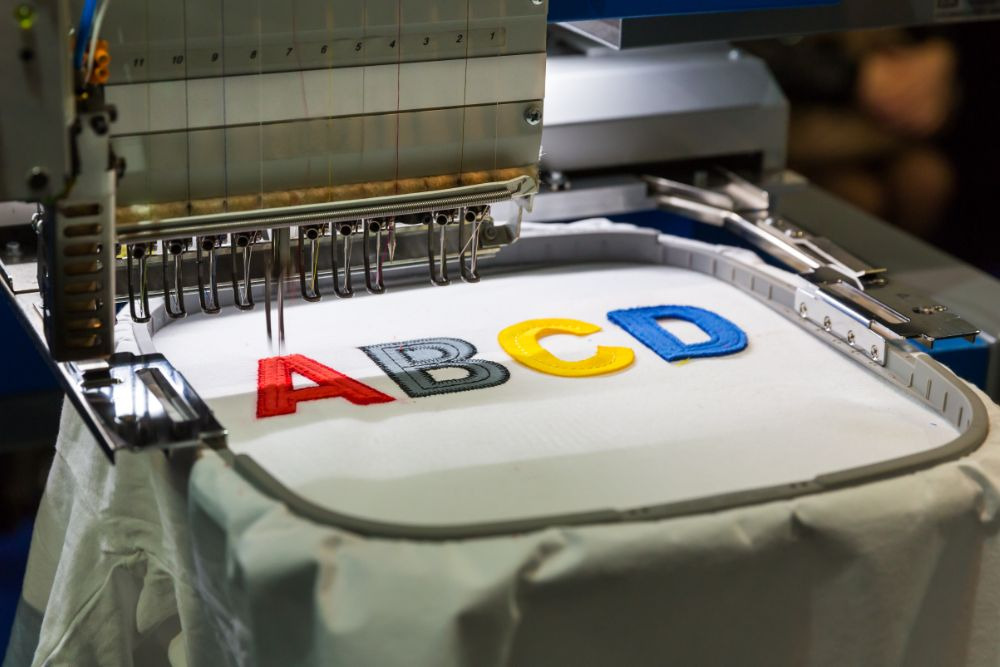
Computer embroidery is a method associated with quality, prestige and solid workmanship. The logo or inscription is embroidered onto the material using thread, making the marking tactile and slightly three-dimensional.
Embroidery works great on corporate apparel, polo shirts, sweatshirts, fleeces, hats, jackets, and aprons. It looks great where a professional and elegant effect is important. For this reason, it is often chosen by companies that want their employee clothing to look more presentable.
A major advantage of embroidery is its durability. The pattern does not crack, peel, or wear off like some prints. It withstands frequent washing and intensive use, making it also suitable for workwear.
However, it won't always be the best choice. On very thin or stretchy materials, embroidery can cause the fabric to wrinkle or stiffen. It also has limitations when it comes to fine details, very small lettering, and tonal transitions. If your design includes a photo, gradient, or highly detailed graphics, consider printing.
Heat Transfer – a quick way to personalize
Thermal transfer involves transferring graphics from foil or special paper to a material using high temperature and pressure. This is a very versatile method that works well for both single pieces and short runs.
Popular variations of this technique are flex and flock foils. Flex provides a smooth, slightly flexible print, while flock has a pleasant, fluffy texture. Both methods are often used to mark sportswear, numbers, names, simple text, and graphics.
The biggest advantage of thermal transfer is the speed of processing and the possibility of personalization. You can create a single T-shirt with a name, number, or a personalized design without having to prepare stencils.
However, it's worth remembering that large areas created with heat transfer may limit the material's breathability. With intensive use and improper washing, the print may also crack or peel off the fabric over time. That's why this method works best for simple designs, short runs, and personalization.
Sublimation – perfect for sportswear
Sublimation is one of the best methods of marking polyester clothing. It involves the penetration of dye into the structure of the fibers under the influence of high temperature. This means the print doesn't create an additional layer on the material, is imperceptible to the touch, and doesn't restrict the fabric's breathability.
This is a huge advantage for sports and technical clothing. T-shirts, training sweatshirts, and thermal clothing remain flexible, lightweight, and comfortable. The print is durable, wash-resistant, and does not crack because it becomes part of the material.
Sublimation also allows for highly colorful, detailed graphics, including patterns covering the entire surface of the garment. It's a great choice for sports, club, and event projects.
Its limitation is the material. Sublimation works best on light-colored polyester. It won't work on cotton or dark fabrics if you want full and intense color reproduction.
DTG and DTF printing – full color from just one piece
DTG digital printing, or Direct to Garment, involves applying paint directly to the fabric. It is a good method for full-color designs, photos, illustrations and graphics with a large number of details. It doesn't require matrix preparation, so it's cost-effective even for small print runs.
DTG works best on cotton. It's often chosen for personalized T-shirts, short runs, limited edition collections, and projects where each print can be different.
DTF, or Direct to Film, works a bit differently. First, the graphic is printed on a special film and then transferred to the garment using a heat press. This method is more versatile in terms of materials than DTG, as it can be used not only on cotton, but also on many synthetic and blended fabrics.
Both technologies are very good when detail, color, and order flexibility are important. They are perfect for small runs, personalization, promotional prints, and designs that change frequently.
How to choose the right method for the type of material?
The material is of great importance when choosing a marking technique. Even the best graphics won't look good if they're made incorrectly on the wrong fabric.
Cotton and cotton blends
Screen printing, DTG, embroidery, and some types of thermal transfer work very well on cotton. Screen printing is worth choosing for larger quantities and simpler graphics. DTG will be a good solution for small series, photos, and full-color designs. Embroidery will give the clothing a more elegant and corporate character.
Polyester and synthetic fabrics
For polyester, the most commonly used methods are sublimation, DTF, thermal transfer, and flex foils. Sublimation will be the best choice for light-colored sportswear, because the print is durable, light, and imperceptible. DTF and thermal transfer are suitable for a wider variety of materials and colors.
Fleece and textured materials
Computer embroidery or patches work best on fleeces, thick sweatshirts and fabrics with a fluffy structure. The print may be less legible because the structure of the material makes it difficult to accurately reproduce the graphics. Embroidery is more visible, durable, and better suited to this type of clothing.
How to choose the right method for the intended use of the garment?
When choosing branding, it's worth considering not only the material, but also how the clothing will be used.
When it comes to workwear, durability is key. Clothes are frequently washed and exposed to dirt, abrasion, and intense use. Embroidery, screen printing, or appropriately selected DTF are ideal for this purpose.
When it comes to corporate apparel, aesthetics and image are key. Polo shirts, shirts, sweatshirts, and fleeces with embroidered logos look professional and build brand trust. If you want a larger or more promotional design, you can combine embroidery with a print.
Comfort is paramount in sportswear. The print shouldn't restrict movement, stiffen the material, or impair breathability. That's why sublimation, flexible foils, and DTF work very well in this category.
When it comes to promotional and event clothing, price, turnaround time, and visual effect are usually key factors. Screen printing is most often chosen for larger quantities, and DTG, DTF, or thermal transfer for shorter runs.
Budget and order size
The cost of marking depends on the technology, number of pieces, colors, size of the print or embroidery, and the complexity of the design.
Screen printing is very cost-effective for large print runs. The preparation cost is then spread over many pieces, resulting in a favorable unit price.
Digital methods such as DTG and DTF, as well as thermal transfer, are more suitable for small print runs. They don't require expensive preparation, so you can even order single pieces.
Embroidery is usually more expensive than a simple print, but it produces a very durable and prestigious effect. It's worth choosing when you want your clothing to last longer and represent your brand well.
Practical Recommendations
For workwear, embroidery, screen printing, or durable DTF are best. These methods are resistant to intensive use and frequent washing.
Computer embroidery is perfect for corporate and representative clothing. It looks especially good on polo shirts, sweatshirts, fleeces, shirts, and hats.
For sportswear, the best choice is sublimation on light polyester, as well as flexible foils or DTF. These techniques allow for comfort and freedom of movement.
For short runs and personalization, DTG, DTF, or thermal transfer are recommended. Thanks to them, you can create single pieces, different design variants, names, numbers, or limited collections.
For large advertising orders, screen printing is the most cost-effective, especially if the design is not very complex in terms of color.
Summary
There is no one best method of marking clothing for every project. It all depends on the material, quantity, type of graphic, purpose of the garment, and budget.
Screen printing is a good choice for larger quantities and durable advertising prints. Embroidery is suitable for applications where elegance, prestige, and durability are important. Heat transfer allows for quick personalization and short runs. Sublimation is ideal for light-colored polyester clothing, especially sportswear. DTG and DTF offer the greatest flexibility for full-color designs and smaller orders.
The best results are achieved when the marking method is tailored to the specific garment, rather than chosen randomly. Well-chosen technology makes a logo or graphic look professional, retains its aesthetic appeal for a long time, and truly supports the brand's image.
Comments (0)