Customized clothes today are much more than just a T-shirt with a logo. For sports clubs, companies, and organizations, they are a way to build recognition, strengthen team bonds, and create a professional image.
Well-designed clothing with print or embroidery can serve several functions simultaneously. It is practical, comfortable, aesthetically pleasing, and promotes the brand or club wherever its wearers go. Whether at training, competitions, trade fairs, client meetings, or everyday work, a cohesive outfit instantly makes a better impression.
That's why more and more companies and sports clubs are investing in personalized clothing. It's a simple way to stand out from the competition and create a uniform, polished image.
What are personalized clothes?
Personalized clothes are clothes prepared according to an individual design. It can include a logo, company name, club crest, player number, name, advertising slogan, graphics, or any motif tailored to the customer's needs.
Personalization can be achieved using various methods, such as computer embroidery, screen printing, sublimation, DTG, DTF, or thermal transfer. The choice of technology depends on the type of material, the number of pieces, the expected durability, and the nature of the design.
The most important thing is that the clothing is not random. Creates a cohesive image for a team, club, or brand.
Customized apparel for sports clubs
In sports, the appearance of a team is very important. Uniforms help build a sense of community, facilitate player identification, and strengthen the club's identity. Well-designed sportswear can also raise a club's prestige in the eyes of fans, sponsors, and opponents.
Personalized jerseys, sweatshirts, jackets, and accessories make a team look professional both during and off the pitch. This is important not only for large clubs, but also for local teams, sports schools, academies, running groups, and amateur clubs.
Clothing can be personalized with a coat of arms, club name, sponsor logo, player numbers, names, and individual graphic elements. This allows each design to be tailored to the team's personality.
Customized apparel for companies
In companies, clothing with a logo helps build a professional and consistent image. Employees wearing identical polo shirts, sweatshirts, softshell jackets, or shirts are easier to recognize and immediately associate with a specific brand.
This is especially important in the service, retail, event, catering, technical, and manufacturing industries. Corporate clothing makes your team look more credible, organized, and professional.
Personalized clothing can also be an effective form of advertising. The logo on the clothing of an employee, courier, service technician, or sales representative is visible in public spaces and reinforces brand awareness.
What clothing can be personalized?
The possibilities are very wide. Personalization can be applied to sportswear, corporate clothing, workwear, or casual wear.
The most common ways to personalize:
-
sports shirts,
-
thermal T-shirts,
-
T-shirts,
-
sweatshirts,
-
polo shirts,
-
softshell jackets,
-
polary,
-
sports pants,
-
leggings,
-
hats,
-
chimneys,
-
compression sleeves,
-
backpacks,
-
bags,
-
workwear,
-
corporate shirts.
This allows you to create a whole set of clothing and accessories in one visual identification. This is especially useful for clubs that want consistent match, training, and away kits, and for companies that need clothing for different departments or positions.
Printed Sports and Thermal T-Shirts
Sports jerseys are one of the most frequently chosen products for personalization. They should be lightweight, breathable, and comfortable, as they are used during training, competitions, and intense exercise.
Sublimation is particularly effective for sportswear. It allows for a durable, full-color print that does not crack, wear off, or feel undetectable. This ensures the jersey remains flexible and comfortable to wear.
This is a good solution for teams in soccer, volleyball, basketball, running, cycling, and many other disciplines. You can create jerseys with a crest, numbers, names, sponsors, and personalized graphics.
Jackets and softshells with logos
Personalized jackets, especially softshells, are a very practical element of club and company clothing. They protect against wind, light rain, and cold, while also looking good.
Softshells are often embroidered or printed with a material-specific design. Embroidery creates an elegant and durable effect, making it a great addition to a company or club logo. A print can be better when the design is larger, more colorful, or contains fine details.
Softshells with logos are popular with coaches, field workers, sales representatives, technical teams, and service companies.
Sweatshirts, fleeces and polo shirts
Sweatshirts, fleeces and polo shirts are perfect for both companies and sports clubs. They are comfortable, practical, and easily branded.
Computer embroidery looks great on these types of products. A logo embroidered on the chest or sleeve adds a more professional touch to the clothing. For larger graphics, you can use a print, for example on the back.
Embroidered polo shirts are a good choice for companies that want to look elegant but not overly formal. Sweatshirts and fleeces are perfect for employees, coaches, players, volunteers, or event crews.
Accessories with print or embroidery
Personalization doesn't have to be limited to apparel. Hats, scarves, backpacks, bags, and sports sleeves can also be part of a coherent visual identity.
Such accessories complement an outfit well and are practical for everyday use. A cap with an embroidered logo, a printed bag, or a club scarf can be used by players, employees, fans, or event participants.
Accessories are also a good idea for promotional items or products for the club's community.
Clothing marking technologies
Selection The marking method is crucial. One technology will work well on a sports shirt, another on a fleece, and yet another on a softshell jacket. It's worth choosing it according to the material, quantity, and nature of the project.
Computer Embroidery
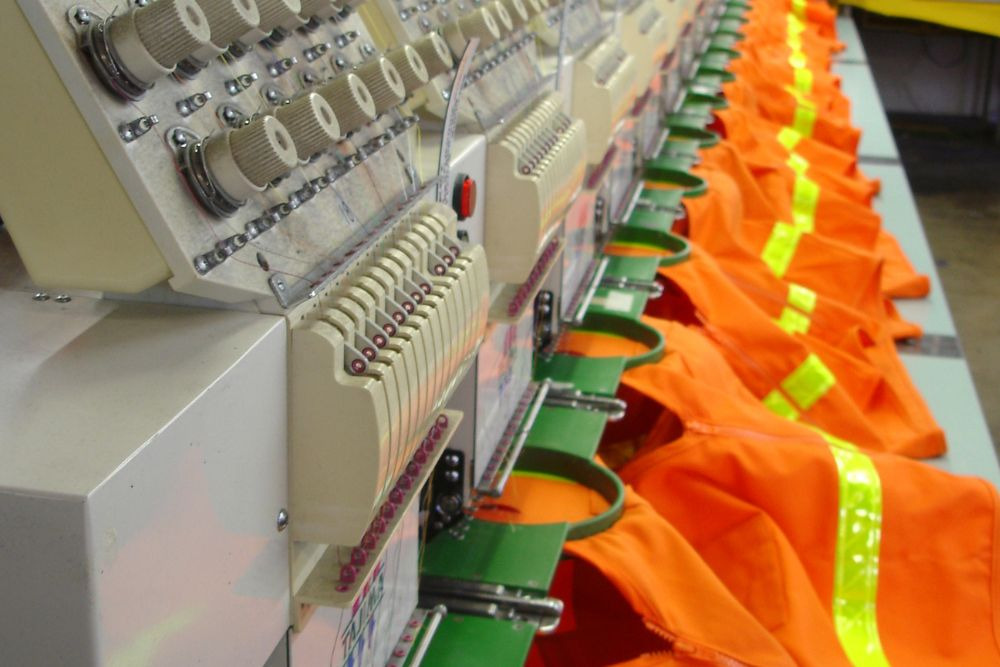
Computer embroidery is one of the most elegant and durable marking methods. The logo is embroidered with thread, giving it a professional look and resistance to heavy use.
Embroidery works best on sweatshirts, fleeces, jackets, hats, polo shirts, and workwear. However, it is not best for very thin materials, large graphics, photos, or gradients.
Screen Printing
Screen printing is a proven method for larger quantities. It produces durable, expressive prints and works well on promotional, corporate, and workwear.
It is particularly cost-effective when ordering multiple pieces of the same design. For very small runs or multiple graphic versions, it is better to consider digital printing or thermal transfer.
DTG Digital Printing
DTG, or Direct to Garment, allows you to print detailed, colorful graphics directly on the material. It works well for short runs, personalization, and designs with a large number of colors.
This is a good method for T-shirts, limited collections, individual designs, and smaller orders. It usually gives the best results on cotton.
DTF
DTF is a technology in which graphics are first printed on a special foil and then transferred to clothing. It is more versatile in terms of materials than DTG and can be used on many types of fabrics.
Works well for full-color projects, short runs, and personalization. It is a popular choice for corporate, sports, and promotional apparel.
Sublimation
Sublimation is one of the best methods for polyester sportswear. The print penetrates the fabric structure, making it undetectable, durable, and wash-resistant.
This is the perfect solution for match, training, and thermal shirts. It allows you to create very colorful designs, even on the entire surface of clothing.
Heat Transfer
Thermal transfer involves transferring graphics to a material using high temperature and pressure. Flex and flock foils are often used. Flex creates a smooth effect, while flock has a soft, fluffy texture.
This is a good method for numbers, names, simple lettering, and short series. It also works well for personalizing individual items.
Why do personalized clothes strengthen your brand?
Clothing with a logo acts as mobile advertising. It is visible during work, training, competitions, industry events and everyday activities. This allows the brand or club to appear naturally in public spaces.
A uniform uniform also builds trust. The company looks more professional, and the club more organized. For employees and players, personalized clothing can also be a integrating factor. It creates a sense of belonging and strengthens identification with the team.
This is particularly important for sports clubs. A kit not only distinguishes a team, but also builds emotions, pride, and a bond with the club colors.
What does the ordering process look like?
The process of ordering personalized clothing usually starts with selecting products. At this stage, it's worth determining what the clothing will be used for: training, work, promotions, competitions, travel, or everyday use.
Next, the graphic design is prepared. This can be a pre-made logo, club crest, lettering, number, name, or a full graphic. A good contractor should check whether the design is suitable for the chosen marking technology and suggest any adjustments if necessary.
The next step is to choose the marking method. Based on the material, quantity, and design, embroidery, printing, sublimation, DTF, DTG, screen printing, or heat transfer are selected.
After the design is approved, production begins. Logistics are also important for larger orders: assembling sizes, dividing by player or division, reordering options, and efficient delivery.
What should you pay attention to before ordering?
Before ordering, it is worth defining your needs well. Clothing is designed differently for a sports team, for office workers, and for a technical crew.
The most important things are:
-
type of clothing,
-
material,
-
purpose,
-
number of pieces,
-
number of sizes,
-
marking position,
-
personalization method,
-
durability of print or embroidery,
-
possibility of additional orders in the future,
-
graphic design quality.
It's also worth paying attention to comfort. Clothing should look good, but above all, it should be comfortable. This especially applies to sports shirts, workwear, and everyday clothes.
Can I order individual items?
In many cases, yes. Modern technologies such as DTF, DTG, and thermal transfer allow for the production of single copies or short series without high preparation costs.
This is a good solution for small businesses, new clubs, one-time events, gifts, personalized T-shirts, or test projects.
For larger quantities, screen printing or sublimation may be more cost-effective, especially if the design is repetitive and will appear on many pieces of clothing.
Recommendations for sports clubs
Sports clubs should pay special attention to material and comfort. Clothing must perform well during movement, wick away moisture, and remain durable despite frequent washing.
Sublimation on polyester works best for match and training jerseys. For sweatshirts, fleeces, jackets, and hats, consider embroidery or a permanent print. It's also a good idea to ensure consistency throughout the entire set: from the T-shirt, through the sweatshirt, to the backpack or scarf.
The possibility of later reorders is also important, for example for new players, coaches, or fans.
Recommendations for companies
Companies should choose clothing that suits the nature of the work and the brand image. For office or customer service employees, polo shirts, shirts, sweatshirts, and softshell jackets with an embroidered logo are good choices.
For technical teams and field workers, durability, comfort, and resistance to frequent use will be more important. In such a case, it is worth choosing solid materials and marking methods that are resistant to washing and abrasion.
If the garment is intended for advertising purposes, larger prints can be used on the back or sleeves. A logo on the chest creates a professional look, and a larger print increases brand visibility.
Summary
Personalized clothing is a practical tool for building the image of a club, company, or organization. They help distinguish a team, strengthen the sense of belonging, and make the brand more visible.
Thanks to a wide selection of products and labeling technologies, you can create clothing tailored to your specific needs: sports, corporate, work, advertising, or casual.
The most important thing is the right combination of material, design, and personalization method. Embroidery is perfect for applications where elegance and durability are key. Sublimation is great for sportswear. Screen printing is more cost-effective for larger orders. DTG, DTF, and heat transfer allow for quick production of short runs and personalized designs.
Well-designed clothing with a logo isn't just an accessory. It's a part of brand communication that contributes to brand recognition every day.
Comments (0)