The modern work environment increasingly allows for greater freedom in clothing choices, opening up space for experimenting with casual style in the office. Combining comfort with elegance, casual style is an ideal alternative to rigid, formal dress codes while maintaining respect for professionalism. However, this freedom requires a conscious approach to wardrobe selection to avoid unintentional faux pas and maintain an appropriate appearance.
Definition of casual style in the office
Casual in a business environment is a style that allows for less formal, yet still neat and aesthetically pleasing outfits. In practice, this means choosing clothes made of high-quality materials, subdued colors, and tailored, but not form-fitting cuts. Unlike business casual or smart casual, casual allows for more freedom, but requires a balance between casualness and impeccable appearance.
Basic rules of casual attire for work
- Fitness and aesthetics: Clothes should be clean, ironed, and well-tailored – avoid items that are too loose or too tight.
- Colors: Neutral colors such as navy blue, black, white, beige, or gray form a base that can be complemented with delicate accents in shades of burgundy, bottle green, or navy blue.
- Material: Natural fibers – cotton, linen, silk, wool – ensure thermal comfort and aesthetics, as well as the durability of the wardrobe.
- Avoiding excess: Casual style does not allow for clothes with large Prints, distressed jeans, too-short skirts, or plunging necklines.
- Footwear: Choose classic and comfortable styles, such as moccasins, loafers, ballet flats, or leather sneakers, which combine comfort with aesthetics.
Key pieces for a casual work wardrobe
Trousers and jeans
Jeans in a solid, dark shade (navy or black) can be the foundation of a casual outfit, provided they are free of rips and embellishments. Alternatively, chinos or palazzo pants with a looser fit provide both comfort and a stylish look. Looser styles, such as culottes or cigarette pants, are in line with current trends and allow for easy matching of tops.
Blouses, Shirts, and Sweaters
Classic cotton or linen shirts in muted colors and delicate patterns are a universal choice. Oversized shirts, if well-chosen, can add a modern touch to an outfit. Straight-cut sweaters—cardigans, turtlenecks, or knit midi dresses—are perfect for the fall and winter seasons, providing elegance and warmth.
Blazers and Blazers
A blazer is an essential element of a casual look, adding a formal touch to even the most casual outfits. Oversized or fitted styles in neutral colors (navy, black, gray) pair beautifully with both jeans and dress pants. It's worth investing in models made of natural fabrics that maintain their shape and aesthetics all day long.
Dresses and Skirts
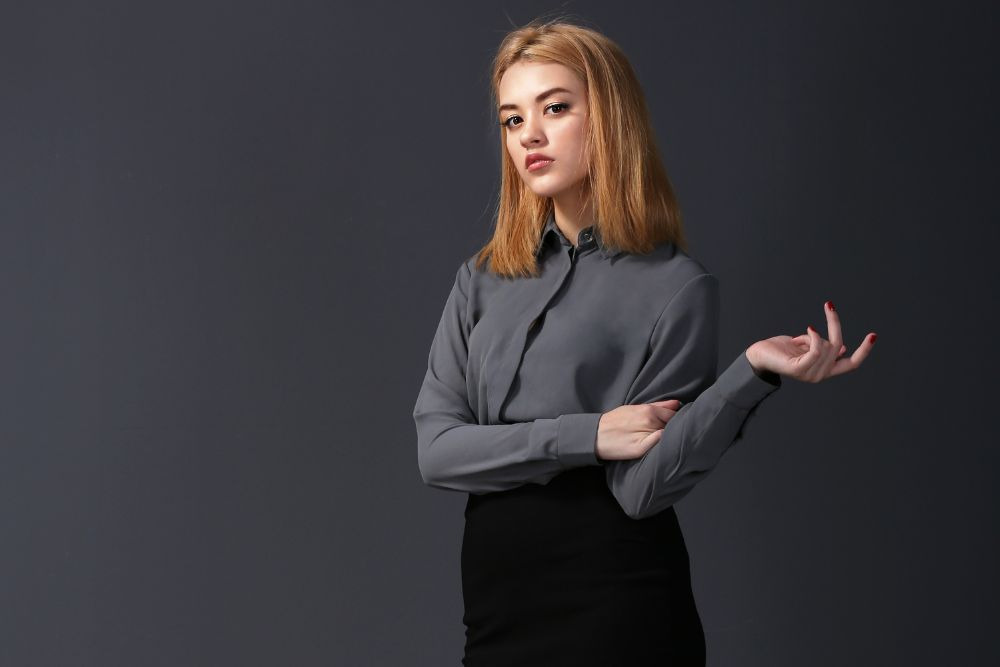
Simple-cut dresses in midi or knee-length, made of breathable materials, are an excellent base for casual outfits. Pencil or pleated skirts, paired with plain blouses and blazers, balance comfort with professional style. For summer outfits, it's worth choosing knit or cotton dresses, which ensure comfort and a flawless look.
Sporty Elegance in a Casual Look
Modern casual workwear often incorporates sporty elements, allowing for comfort without sacrificing professionalism. Sneakers made of high-quality leather or technical materials replace classic shoes, ensuring comfort throughout the long day. An oversized blazer paired with straight trousers and white sneakers creates a casual yet well-thought-out outfit.
Sample outfit
- Black straight-cut jeans
- White cotton shirt
- Navy oversized blazer
- White genuine leather sneakers
- Black leather shopper bag
This outfit guarantees comfort and a modern, professional look.
Casual accessories for work
Accessories play an important role in completing a casual outfit, emphasizing individuality and professionalism. A minimalist watch with a leather strap or metal bracelet adds a touch of expressiveness, while subtle jewelry—delicate earrings or a thin bracelet—adds sophistication without overdoing it. A handbag should be, above all, practical—a spacious shopper bag or elegant briefcase made of high-quality leather will easily accommodate documents and a laptop, while also enhancing the overall style.
Tailoring your casual attire to the specifics of your company and role
Awareness of the requirements of your organizational culture and industry is essential when creating a casual work outfit. In creative environments, such as advertising agencies or IT companies, you can allow yourself more freedom by incorporating bolder accessories and fashionable cuts. However, in the financial, legal, and administrative sectors, more conservative dress codes still apply, requiring the use of subdued colors and classic styles.
Analyzing the behavior of your colleagues and understanding official company guidelines promotes informed wardrobe choices, eliminating the risk of looking inappropriate. It's also worth considering the nature of the work – those working in customer contact should opt for more formal pieces, while creative department employees can experiment with fashion.
Avoiding fashion pitfalls in casual work outfits
Despite the freedom that casual wear offers, it's important to avoid outfits that can disrupt a professional image. Careless clothing choices, such as worn-out fabrics, too-short skirts, tight leggings, or overly sporty items (e.g., hoodies or sweatpants), are unacceptable. Appropriate footwear should also be considered – clean, carefully selected flat shoes or low heels are essential.
Skillfully combining casual pieces with classic pieces, such as a jacket or shirt, allows you to create an outfit that is both comfortable and appropriate for the work environment. Moderation and attention to detail are the foundations that prevent fashion mistakes.
Summary
Casual workwear meets the needs of modern women who want to combine comfort with a professional image. Choosing the right clothes and accessories, based on natural materials, subdued colors, and tailored styles, allows you to maintain a balance between casualness and elegance. Observing the organizational culture and adapting to its requirements eliminates the risk of fashion mistakes, while experimental yet thoughtful accents allow you to express your individual style.
Key wardrobe staples include classic blazers, elegant shirts, chinos, or dark jeans, as well as comfortable shoes that will complete the look. Accessories such as minimalist jewelry, a watch, or a leather handbag provide an elegant finishing touch to the look. Casual work outfits are becoming not only a fashionable choice, but also a strategic tool for building a professional image in a modern professional environment.
Comments (0)