In graphic design and typography, precise typeface selection is the foundation of effective visual communication. Ensuring correct handling of Polish diacritical marks (ą, ć, ę, ł, ń, ó, ś, ź, ż) remains a particular challenge, as they require dedicated font support due to their specific nature. The lack of a complete set of glyphs results in an unprofessional appearance and can undermine their credibility. In this article, I will provide an in-depth analysis of available typographic solutions for the Polish alphabet, highlighting the technical, aesthetic, and practical nuances of choosing fonts with Polish characters.
Basic distinctions: font, typeface, and typeface
A precise understanding of terminology is essential to avoiding errors in professional communication. A "font" is traditionally the physical carrier of a printing symbol—a single metal block, which in the digital age has given way to a typeface. A "font" is an electronic set of glyphs, encompassing various variations and styles of a given typeface. A "typeface" refers to the visual representation of characters along with their properties (e.g., proportions, serifs, line spacing). In practice, many designers use the term "font" interchangeably with a font, which in a digital context is imprecise but widely understood.
The Importance of Polish Diacritical Marks in Typography
The Polish language has 18 unique diacritical marks – 9 each in lowercase and uppercase versions – which must be an integral part of a complete font. Their presence ensures linguistic correctness and aesthetic coherence of the text. The phrase "Zażółć gęśli jaźń" ("Yellow gusli jaźń") is a commonly used test of the completeness of a glyph set, excluding digraphs, which are not represented by single characters.
Fonts lacking a complete set of Polish characters most often replace them with system characters or display so-called "Bushy lines," which degrades the design's appeal. In print, failing to embed a font with Polish characters in PDF files leads to automatic font substitution and the loss of diacritics. The solution is to embed fonts (embed all fonts) or convert the text to outlines, which guarantees flawless character reproduction.
Font types and their characteristics in the context of Polish characters
Serif fonts (serif)
Serifs – the additions at the ends of letters – serve as guides for the reader, increasing the readability of longer texts. The most representative typefaces include Merriweather, Lora, Playfair Display, and Bodoni. High contrast and elegant details make them suitable for premium print designs and long-form publications. However, caution should be exercised when using fonts with very thin serifs, which may disappear when printed digitally or on absorbent paper.
Sans-serif fonts
Simple, unadorned sans-serif fonts are the foundation of legibility in digital designs and low-contrast print. Popular examples include Roboto, Open Sans, Lato, Montserrat, and Poppins. Their geometric or humanistic forms allow for versatile use, from websites to advertising leaflets. A high x-height (e.g., Merriweather) ensures legibility at small sizes, which is important for Polish signs with additional elements.
Calligraphic and handwritten fonts
Fonts imitating handwriting, such as Allura, Great Vibes, Dancing Script, and Lemon Tuesday, are gaining popularity in invitation, certificate, and special occasion design. The key challenge here is maintaining the legibility of Polish characters in the demanding letterform. It's worth paying attention to kerning and tail proportions, which are often neglected in some free fonts, requiring careful testing.
Technical and monospaced fonts
Monospaced typefaces, such as Intel One Mono, are effective in design related to the IT industry, programming, and industrial visual identification. Their minimalist, legible form and full support for Polish characters make them a practical choice in specific contexts.
Key criteria for choosing fonts with Polish characters
- Complete character set: Ensure the font includes a full set of Polish diacritics. You can verify this by entering a test sentence with Polish characters or using language filters on platforms like Google Fonts or Adobe Fonts.
- License: Verify whether the license allows for the intended use (commercial, print, online). The Open Font License (OFL) and Apache 2.0 are usually the most permissive.
- Legibility: Pay attention to the x-height, contrast, kerning, and the behavior of thin elements at low DPI – especially important for offset printing.
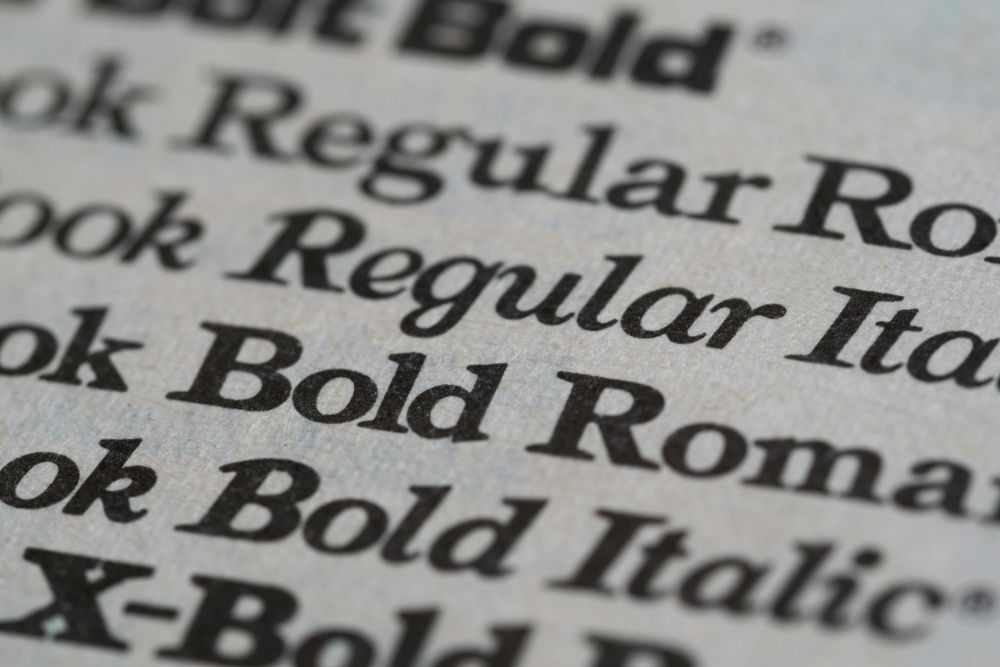
- Number of weight variants: The availability of various weights and styles (e.g., Regular, Bold, Italic) allows you to build a visual hierarchy without having to mix different typefaces.
- Aesthetics and compatibility with context: The font should match the character of the project – from modern, minimalist, through classic, to decorative and calligraphic.
- Technical support and updates: Use reputable sources that regularly update fonts and provide glyph bug fixes.
Overview of the most important font sources with Polish characters
Google Fonts
The largest and most accessible library of free fonts. Offers over 1,400 typefaces with full support for Latin Extended, including Polish characters. Intuitive filters and live previews allow you to quickly verify glyph completeness. The OFL license allows for free use in commercial and print projects. Fonts such as Roboto, Lato, Merriweather, Playfair Display, and Montserrat are industry standards.
Adobe Fonts
A premium platform integrated with Creative Cloud, offering thousands of professional typefaces with full Central European support. Font synchronization with Adobe applications ensures ease of work. The ability to preview OpenType features (ligatures, nautical numerals) and precise filtering facilitates the selection of the optimal font. Licensing is available via subscription.
MyFonts and Fontspring
Commercial platforms selling high-quality premium fonts. MyFonts offers extensive search and preview options, including testing for language support (Central European). Fontspring stands out for its transparent "Worry-Free Licenses" and detailed language support. They are an excellent source of unique and refined typefaces, often with individual support from the authors.
Polish workshops and local services
Fonty.pl and Capitalics are examples of platforms dedicated to the Polish market. They offer fonts specifically designed for Polish typography, guaranteeing perfect diacritical mark support and native language support. Capitalics also allows for the creation of custom fonts, which is important for branding projects requiring uniqueness and the highest quality.
Free Additional Libraries
Font Squirrel, DaFont, and FontSpace provide numerous free fonts, but their resources often require additional verification of support for Polish characters and licenses. It is worth using the available filters and testing fonts for Polish diacritics to avoid typographical problems.
Practical tips for selecting and implementing fonts with Polish characters
- Test fonts in the target environment: Check the display of Polish characters in the programs in which the font will be used (InDesign, Illustrator, Photoshop, CMS).
- Use test phrases: Enter "Zażółć gęśli jaźń" or a full set of Polish letters to verify the presence and correctness of the glyphs.
- Embed fonts in PDF files: During the export process, select the "Embed all fonts" option or convert text to outlines to avoid printing problems.
- Pay attention to minimum font sizes: For digital printing, a minimum of 7 pt, offset 6 pt, and with high-contrast fonts (e.g., Playfair Display) appropriately larger.
- Choose the right contrast and line thickness: Fonts with low contrast and solid tails are better for printing on absorbent paper and low DPI.
- Limit the number of fonts used: A maximum of two typefaces in one project (e.g., one for headings, the other for continuous text) prevents visual chaos and maintains consistency.
- If you use Canva or other online tools: use language filters and ready-made font combinations with Polish characters, and if possible, add your own fonts in premium plans.
Selected font recommendations with Polish characters for various applications
For long texts and books
- Merriweather – high x-height, solid serifs, designed for readability on screen and in offset printing.
- Lora – elegant, humanistic, moderate contrast, a good choice for print publications.
For headings and accents
- Playfair Display – luxurious, high-contrast font, gives prestige, but requires use in larger sizes.
- Montserrat – geometric, modern, versatile, works well in digital and print projects.
Handwritten and calligraphic fonts for special occasion projects
- Allura, Great Vibes, Dancing Script – elegant and legible handwritten fonts with full support for Polish characters, ideal for invitations and certificates.
- Lemon Tuesday, Bajaderka – Polish calligraphic designs available under the SIL OFL license, ensuring uniqueness and good readability.
Sans-serif fonts for corporate and technology projects
- Roboto, Open Sans, Heebo – fonts with a high level of legibility, broad language support, and a large number of weight variants.
- Intel One Mono – monospace for the IT industry and technical projects.
Summary and Recommendations
Professional design requires not only aesthetics but also precise handling of Polish diacritics. Choosing a font with a full set of glyphs, an appropriate license, and the correct character structure is the foundation of a successful project. Using reputable libraries such as Google Fonts, Adobe Fonts, or local typographic studios guarantees technical accuracy and aesthetic consistency. Testing fonts for legibility, detail retention at various sizes, and embedding in PDF files prevents errors and allows for effective communication. Remember that typography is not just a tool, but an art that can enrich the message and emphasize the visual identity of any project.
Comments (0)