Embroidery is one of the oldest and at the same time most elegant textile decoration techniques, which has gained popularity both in everyday fashion and in the professional B2B sector. In the context of the production of promotional and workwear, which is carried out by P&M Sewing Shop, computer embroidery is not only a method of artistic expression, but also a tool for building a brand image through durable and aesthetic marking.
Characteristics of Computer Embroidery as a Method of Clothing Marking
Technological process and project preparation
Embroidery Computer embroidery involves the precise embroidery of patterns using digitally controlled machines that reproduce graphic designs prepared using specialized software. The digitization stage involves converting a graphic file (e.g., .cdr, .ai, .eps format) into a stitch map, including the type, length, density, and direction of the stitches, as well as the order of thread colors. The efficiency of this process determines the quality and durability of the final embroidery.
Embroidery machines, such as those used at the P&M Sewing Shop, can handle up to 30 heads simultaneously, enabling the production of up to 3,000 embroidery projects per day. Thanks to advanced technology and many years of experience, it is possible to create both small and very complex designs, from simple lettering to multi-colored corporate graphics.
Thread and Stitch Selection
High-quality threads, such as polyester or cotton, in a wide range of colors (including metallic and fluorescent) are crucial for achieving a durable and aesthetic effect. The choice of stitches (e.g. straight, chain stitch, satin, marguerite) is adapted to the nature of the pattern and the type of material. Stitches must be even and their length appropriately selected to avoid fabric puckering and ensure clear contours, especially with details such as circles and curves.
Fabric as the foundation of quality embroidery on garments
Properties of fabrics and their impact on embroidery
Optimal substrate Fabrics with a stable weave and appropriate weight, such as cotton, linen, denim, corduroy, and fleece, are suitable for embroidery. These materials ensure durability and comfort. For stretchy knits or sweaters, it is recommended to use a hoop and spray stabilizers, which prevent the material from shifting and deforming during embroidery.
Embroidery on thin fabrics (weight below 185-190 g/m²) is not recommended, as unsightly holes and distortions may occur. The P&M sewing room has the knowledge and experience to assess the suitability of fabric for embroidery, advising customers on the best solutions.
Embroidery Protection and Care
To maintain the durability of the embroidery, it is extremely important to properly protect it from the bottom of the material, for example by using non-woven fabric, thermal transfer ribbons or embroidery pads. These protective measures prevent thread deformation and unraveling and improve comfort, especially when embroidered garments are worn directly on the body.
It is recommended to wash embroidered garments inside out, at a low temperature, using a mild detergent, and to avoid tumble drying. Ironing should also be done from the side opposite the embroidery, using an additional protective cloth to prevent mechanical damage.
Practical Aspects of Embroidery on Clothes – From Design to Implementation
Personalization and application in B2B production
Embroidering on clothing is not only about aesthetics, but also an effective form of personalization that increases brand prestige and recognition among customers and employees. The P&M Sewing Shop processes orders for advertising agencies, companies, and clothing brands, including embroidery on a variety of products: polo shirts, sweatshirts, softshell jackets, workwear, hats, and many more.
Full control over the production process—from design, through cutting, sewing, to labeling—guarantees consistent quality and timely completion of even the most demanding orders. orders.
Customer cooperation and support – from idea to finished product
Customers receive expert advice when selecting materials, threads and embroidery techniques, as well as assistance in digitizing and optimizing the project for embroidery machines. Each project is subject to detailed quality control, and finished products undergo final processing, including trimming excess threads and possible surface refinement.
Our collaboration is based on transparent costs, with individual pricing taking into account the size, number of colors, and complexity of the embroidery. For companies fulfilling larger orders, the unit price of embroidery is more favorable, which makes this method economically attractive.
Hand Embroidery on Clothes – Hobby and DIY Personalization
Technical Basics and Tools for Beginners
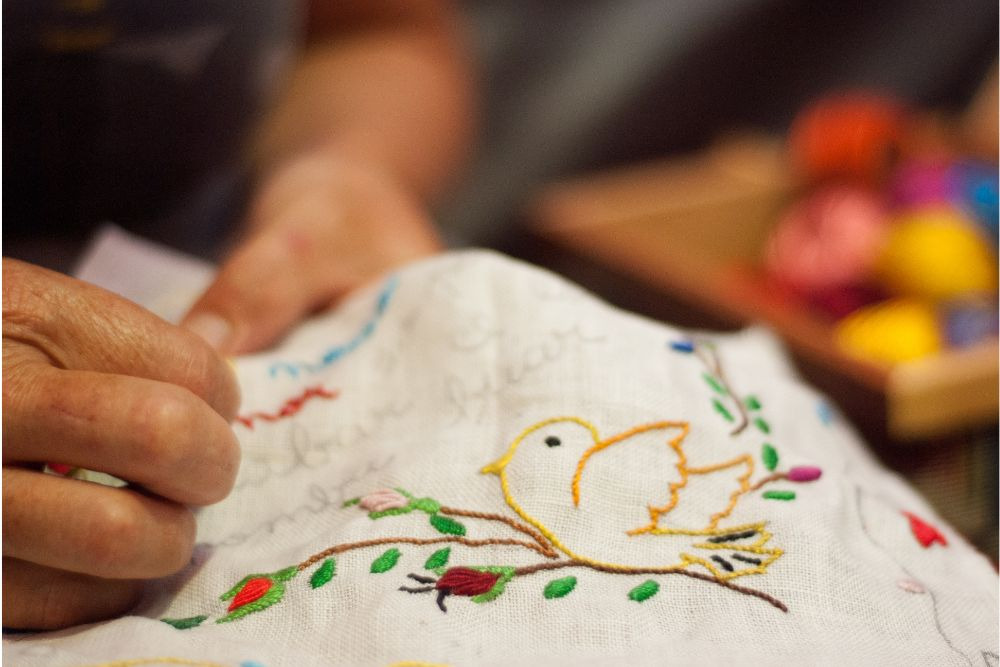
Hand embroidery is an excellent form of individual artistic expression and can be It can be used on a variety of materials. Basic equipment includes large-eye needles, embroidery floss or thread, a hoop to stabilize the fabric, and a simple graphic design. Learning basic stitches (straight, chain, satin, daisy) allows you to create eye-catching embellishments that can be used to refresh or personalize clothing.
Techniques and tips for a beautiful effect
Even thread tension, stitch length control, and precise needle guidance are key to the final look of embroidery. When embroidering curves, it is best to use shorter stitches to achieve smooth contours. When repairing damage, such as holes, it is worth first sewing the damaged area and then decorating it with a satin pattern or sewing a piece of fabric underneath.
Minor imperfections can also be covered with embroidered patches, which are easy to apply and offer a wide range of personalization options.
Summary
Embroidery on clothes is a technique that offers durability, aesthetics and uniqueness, which is used both in the production of advertising and workwear, as well as in individual personalization. By combining traditional craftsmanship with modern computer technologies, P&M Sewing Shop ensures the highest quality of completed projects.
For companies, it is an effective tool for building their image and standing out in the market, and for enthusiasts, hand embroidery is a source of satisfaction and creativity. Choosing the right materials, stitches, and taking care of the embroidery determine its durability and appearance. We encourage you to collaborate and discover the potential of embroidery in clothing personalization.
We handle all questions and individual orders with complete professionalism – please contact the P&M Sewing Team, an experienced partner in clothing production and labeling.
Comments (0)