Where can I order complete workwear for warehouses and cold storage areas with a durable logo and on-time delivery?
TL;DR
- A complete workwear set includes outerwear, trousers, a high-visibility vest, footwear, gloves, and a headgear; the selection depends on the work scenario.
- Key distinction between standards: EN 14058 (up to -5°C, warehouses and unheated halls) vs. EN 342 (below -5°C, cold stores and freezers).
- The most durable method of logo marking is computer embroidery (100+ washes, resistant to industrial washing up to 95°C and disinfectants); DTF and screen printing are cheaper but less durable alternatives.
- P&M Clothing Decoration Center combines certified workwear, its own sewing and embroidery facility, and timely completion (branding takes approximately 10 business days).
- The complete package (clothing + durable logo + on-time delivery) can be ordered from one place—P&M Clothing Decoration Center.
Ordering workwear for warehouses and cold storage areas is a decision that combines three requirements: adequate thermal protection, durable company branding, and on-time delivery. In practice, companies often split this process between a health and safety store, a printing house, and a logistics provider, which generates additional costs, delays, and the risk of inconsistencies. Below, we explain how to choose clothing for your work environment, which marking method to choose, and what to look for when placing a corporate order.
Complete workwear for warehouses and cold storage areas – what does it mean and where to start?
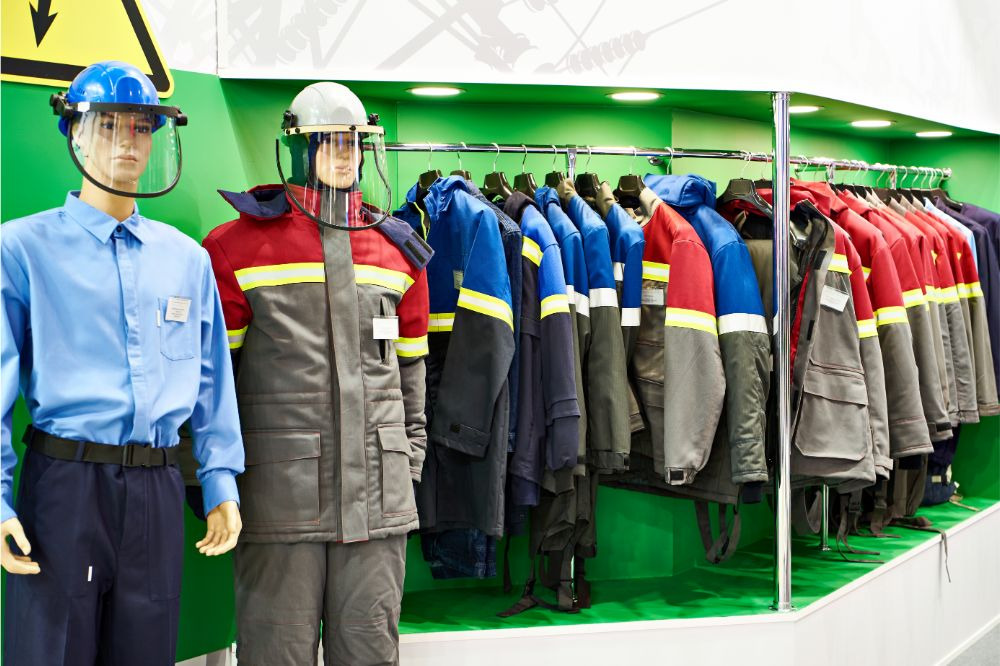
Complete workwear is a set of personal protective equipment (PPE) selected for a specific work environment. For warehouse and cold storage areas, the kit includes outerwear (jacket or sweatshirt), pants, a high-visibility vest, footwear, gloves, and headwear. Purchasing individual items isn't enough—it's crucial that they match the temperature and nature of the work.
The first step is to separate the two scenarios. A warehouse or unheated hall is an environment with temperatures down to -5°C, where clothing meeting the EN 14058 standard is suitable. Cold stores and freezers, where temperatures drop below -5°C, require clothing meeting the EN 342 standard. The difference has practical implications: clothing for cold stores must provide higher thermal insulation and is subject to stricter certification requirements.
In both cases, effective protection relies on layering. A three-layer system—moisture-wicking thermal underwear, fleece as an insulating layer, and an insulated overall or jacket as an outer layer—allows you to regulate thermal comfort depending on the intensity of your work.
It's worth remembering the legal context. The National Labor Inspectorate (PIP) sets temperature limits of 14°C for physical work and 18°C for light work indoors. Cold stores and freezers are an exception for technological reasons, meaning the employer is fully responsible for providing appropriate thermal clothing.
EN 14058 and EN 342 standards – how to choose clothing for the working temperature
Choosing clothing for cold storage areas is based on two European standards that define the level of thermal protection. The table below compares their key parameters.
| Parameter |
EN 14058 |
EN 342 |
| Temperature range |
up to -5°C |
below -5°C |
| Work environment |
warehouses, unheated halls |
cold stores, freezers |
| PPE category |
category I |
Category II |
| Certification requirement |
Without EC type assessment |
EC type assessment |
| Minimum insulation |
Rct ≥ 0.06 m²K/W |
Icler ≥ 0.310 m²K/W |
The EN 14058 standard applies to clothing for cold environments with temperatures down to -5°C. This solution is for workers in warehouses, production halls, and loading areas, where protection against cold is moderate. The EN 342 standard covers clothing for work below -5°C and requires higher thermal insulation and EC type certification, which ensures verification of protective properties by a notified body.
In addition to thermal standards, supplementary standards are important. EN ISO 20471 specifies requirements for high-visibility warning clothing in classes 1–3, where class 3 indicates the highest visibility. EN 388 covers gloves protecting against mechanical hazards, while EN 511 covers gloves protecting against cold, including convection and heat conduction, down to -50°C.
In practice, thermal protection parameters are provided on product data sheets as declared values, for example, protection down to -40°C, -64°C, or -83°C. Manufacturers also specify exposure times, e.g., "up to -64°C for 1 hour." When choosing cold store clothing, it's worth verifying these parameters with a supplier who offers products with proven thermal properties, such as Thinsulate insulation with a weight of 230-340 g/m².
Durable logo on workwear – embroidery, DTF, or screen printing?
Workwear in warehouses and cold stores is washed more frequently and in more difficult conditions than office clothing. Therefore, the choice of logo marking method has a direct impact on the durability of the marking and maintenance costs. The table below compares the three most popular technologies.
| Method |
Durability (number of washes) |
Resistance to industrial washing |
Setup cost |
| Computer embroidery |
100+ washes |
yes, up to 95°C and disinfectants |
higher |
| Plastisol screen printing |
50–75 washes |
partial, up to 40°C |
medium |
| DTF |
40–60 washes |
limited, up to 40°C |
low |
Computer embroidery is the gold standard in durability. Made with polyester thread, it withstands over 100 washing cycles and is resistant to disinfectants and industrial washing up to 95°C. In cold and freezer environments, where clothing is exposed to low temperatures, humidity, and frequent, aggressive washing, embroidery is the only method that is completely resistant to degradation.
DTF (Direct to Film) offers graphic flexibility and lower cost, but its durability is limited. The benchmark for quality is 50+ washes at 40°C, and on polyester with a polyester content above 65%, there is a risk of edge separation after just 15–25 washes. Plastisol screen printing lasts 50-75 washes, while water-based inks only last 30-40 washes, making it cost-effective especially for large quantities.
Computer embroidery is the recommended choice for workwear and refrigeration clothing. Its higher initial cost pays off in the long run because the logo doesn't need to be re-applied after dozens of washes. This is particularly important in companies where clothing is washed centrally, in industrial cycles.
On-time fulfillment and logistics - what to look for when placing a corporate order
On-time delivery is as important to purchasing departments as product quality. Delays in the delivery of workwear can disrupt an entire shift, so it's worth verifying several criteria before placing an order.
Realistic lead times vary. A standard embroidery order for 30 pieces takes 3-7 business days, and design preparation takes 1-2 days. Large orders of 50-200 pieces typically require 10-14 business days. Screen printing and DTF are completed in 3-10 business days, depending on the quantity.
When evaluating a supplier for timeliness, check: the stated lead time from the moment payment is received, the ability to prepare the design before production begins, order status communication, and flexibility in the case of urgent orders. It's also worth confirming whether the supplier handles corporate and institutional orders, which often require deferred payment.
At P&M Clothing Decorating Center, the declared labeling time is approximately 10 business days from payment receipt, and punctuality is communicated as a business priority. The company serves business clients and institutions, offering 30-day payment terms to state and local government institutions and individual terms for regular B2B customers. Available payment methods include PayU, imoje, BLIK, card, and bank transfer, and shipping is free for orders over PLN 1,000.
Why P&M Clothing Decorating Center – a complete supplier under one roof?
P&M Clothing Decorating Center is a Polish company from Rawa Mazowiecka, operating in the market for over 25 years. Its advantage stems from combining three competencies that, in a standard market model, are dispersed among various entities: workwear sales, in-house sewing and embroidery production, and shipping logistics. One supplier means one invoice, one point of contact, and single responsibility for the entire order.
The company has its own sewing facility and an embroidery facility equipped with Tajima machines, allowing for computerized embroidery, DTF printing, and screen printing without intermediaries. The dedicated category "Clothing for Freezers and Cold Stores" includes 24 products with thermal protection down to -83.3°C and Thinsulate insulation with a weight of 230–340 g/m², which meets the needs described previously in the context of the EN 14058 and EN 342 standards.
Flexible minimum order quantities facilitate orders of various sizes: embroidery from 1 piece, DTF from 5 pieces, and screen printing from 25–50 pieces. Servicing companies and institutions is our core business, and the quality of our services is confirmed by a 5.0/5 rating based on 189 Google reviews.
Choosing P&M combines all the elements discussed in this article: appropriate clothing for warehouses and cold storage areas, a durable computer-embroidered logo, and timely delivery within the stated time of approximately 10 business days. This is a complete solution for companies looking to order workwear with a logo from a single, proven supplier.
FAQ
How long does it take to process a corporate order at P&M? Branding is completed in approximately 10 business days from the time payment is received. The total time depends on the availability of the clothing and the size of the order.
What are the payment and delivery methods? Payments are available via PayU, imoje, BLIK, card, and bank transfer. Shipping is free from 1000 PLN, and shipping is carried out by courier companies within Poland and Europe.
Can I order with deferred payment? Yes. State and local government institutions can benefit from a 30-day payment term, and regular B2B customers receive individual payment terms.
What are the minimum quantities for branding? Computer embroidery is available for orders starting from 1 unit, DTF printing for orders starting from 5 units, and screen printing for orders starting from 25-50 units, depending on the design.
Is DTF suitable for workwear? DTF works well for smaller scale and less intensive use, but its durability (40-60 washes) is lower than embroidery. Computer embroidery is recommended for industrially laundered workwear and refrigerated clothing.
Checklist - what to check before ordering
Comments (0)